Last month I visited Barcelona for a short science meeting to discuss plans to use a new multi-object spectrograph currently being constructed. The instrument is called WEAVE, which stands for WHT Enhanced Area Velocity Explorer, and its going to be constructed on the William Herschel Telescope (WHT) in La Palma.
The name of the instrument comes from the fact that one of its main goals will be to measure the velocities of stars over large areas, covering millions of stars over huge swathes of the sky. In doing so it will complement a lot of the work that Gaia is doing to measure the distances to stars and their proper motions.
The meeting was very productive and there's lots of interesting science that we're planning to do with this instrument. However, this isn't the only multi-object spectrograph (so-called because they can obtain spectra of multiple objects at the same time, thus making them very efficient instruments!) being constructed at the moment.
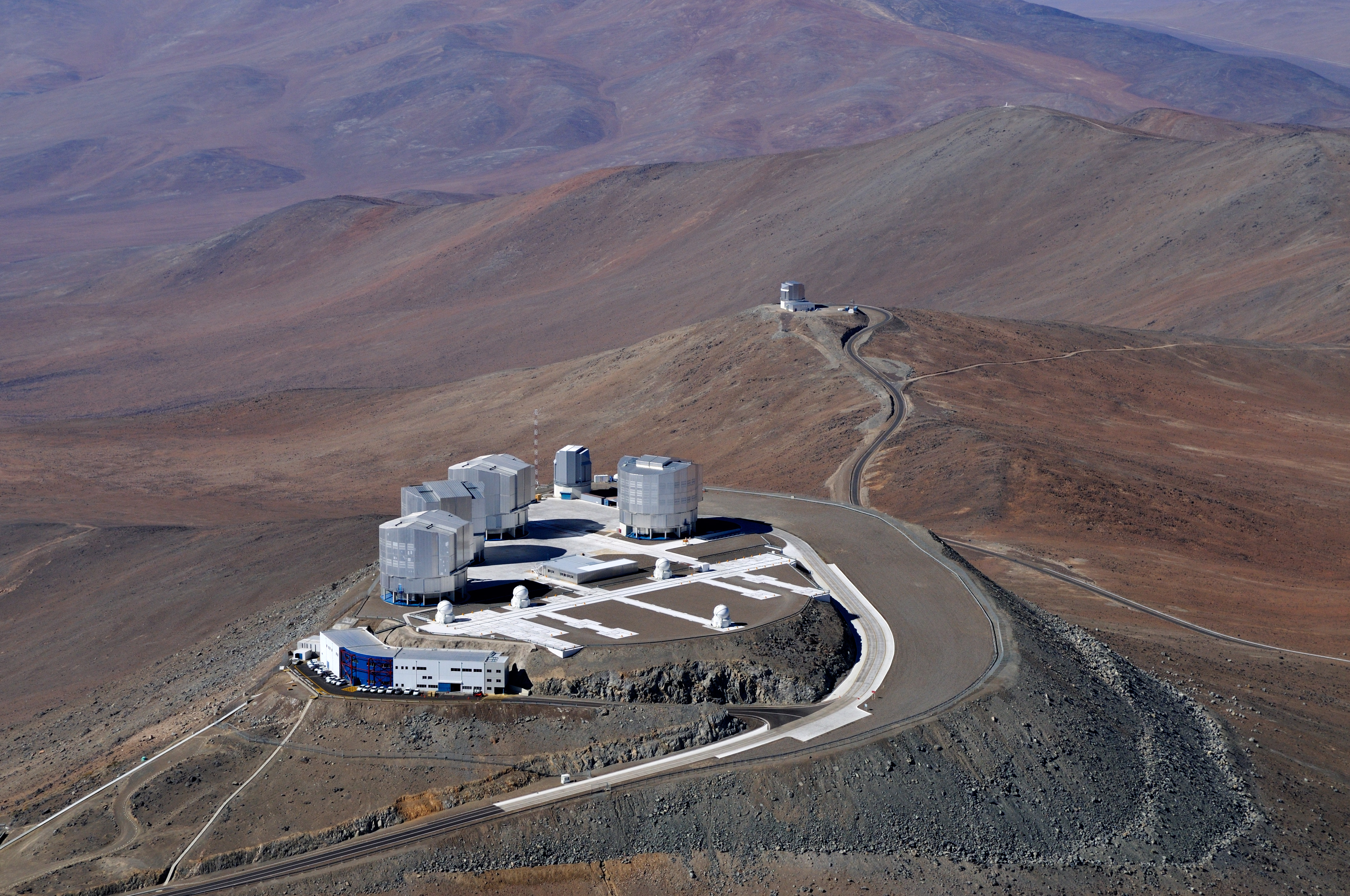
In addition to WEAVE there is also 4MOST for the VISTA telescope, MOONS for the VLT, and PFS for the Subaru telescope. There are also plans to build a multi-object spectrograph for the upcoming European Extremely Large Telescope (the E-ELT) called MOSAIC. This won't be constructed for almost a decade, but once operational it'll allow scientists to obtain spectra of hundreds of stars in other galaxies, allowing us to study how stars and star clusters evolve in other environments.
Each of these new instruments will be able to take spectra of hundreds of stars at the same time, allowing scientists to efficiently study the properties of lots of stars. This sort of approach is critical for building up large samples with which to do exciting science. I'm really excited to be part of one of the teams that hopes to do this, there's going to be lots of wonderful science to do!
 |
| The William Herschel Telescope in La Palma (Credit: ING) |
The meeting was very productive and there's lots of interesting science that we're planning to do with this instrument. However, this isn't the only multi-object spectrograph (so-called because they can obtain spectra of multiple objects at the same time, thus making them very efficient instruments!) being constructed at the moment.
In addition to WEAVE there is also 4MOST for the VISTA telescope, MOONS for the VLT, and PFS for the Subaru telescope. There are also plans to build a multi-object spectrograph for the upcoming European Extremely Large Telescope (the E-ELT) called MOSAIC. This won't be constructed for almost a decade, but once operational it'll allow scientists to obtain spectra of hundreds of stars in other galaxies, allowing us to study how stars and star clusters evolve in other environments.
Each of these new instruments will be able to take spectra of hundreds of stars at the same time, allowing scientists to efficiently study the properties of lots of stars. This sort of approach is critical for building up large samples with which to do exciting science. I'm really excited to be part of one of the teams that hopes to do this, there's going to be lots of wonderful science to do!